
Temple Etiquette for Meditation Visitors in Thailand
What to wear, where to sit, how to treat monks and Buddha images, and what changes when you stay at a meditation centre, from Wat Suan Dok to Wat Ram Poeng.
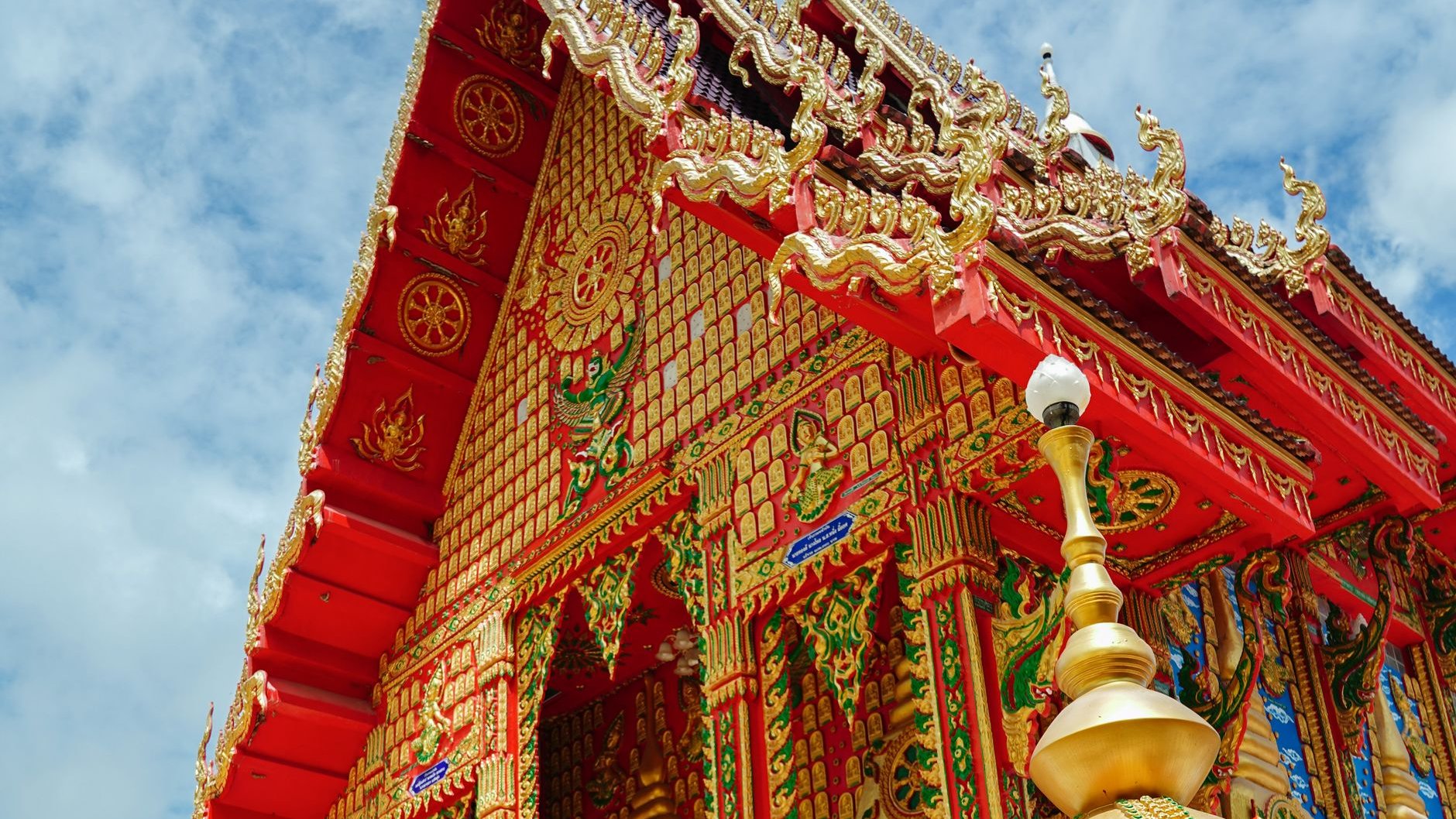
A Thai temple asks very little of a visitor, and most of it is about the body: cover it, lower it and keep it quiet. At Wat Phra That Doi Suthep in Chiang Mai, a TAG Thai guide describes a firm dress code of covered shoulders and knees. At Wat Suan Dok, a short walk from the old city, an English-language chat with student monks happens in the evening.
This guide is for people who plan to sit, listen or stay at a meditation centre, not only to take photographs. It explains the everyday rules first, then what is different when a retreat takes you inside the routine.
How we chose
We used the Tourism Authority of Thailand’s etiquette article from 2018, a 2025 dress-code guide, a Bangkok Post piece from 2014, and the published rules of two meditation centres. Etiquette changes slowly, but individual temples set their own rules, so treat this as a baseline and follow the signs and the staff.
What to wear
The shared rule is to cover shoulders and knees. TAT describes sleeves for men and women, a skirt below the knee for women, and no swimwear or tank tops. The 2025 TAG Thai guide adds that loose cotton or linen is comfortable in the heat and that a scarf helps.
Rules vary by site. The same guide says the Grand Palace is the strictest, with no sleeveless tops, shorts or leggings. It says Wat Pho still requires covered shoulders and knees, and that Doi Suthep has a firm dress code. Wat Arun provides sarongs at the entrance, and Wat Suan Dok sometimes lends them. Guards at popular temples can ask you to rent or buy a cover-up.
At meditation centres the rule is stricter. Suan Mokkh asks for clothing that covers the body from the shoulders to below the knees and is not see-through. Wat Ram Poeng asks for white clothing, worn day and night, which its temple store sells.
Shoes, feet and thresholds
Take off your shoes at the door and again in the worship area. TAT says shoe racks stand outside temples. Step over a raised threshold instead of on it.
When you sit in front of a Buddha image, point your feet away from it. Wear slip-on shoes so the routine is easy.
Buddha images
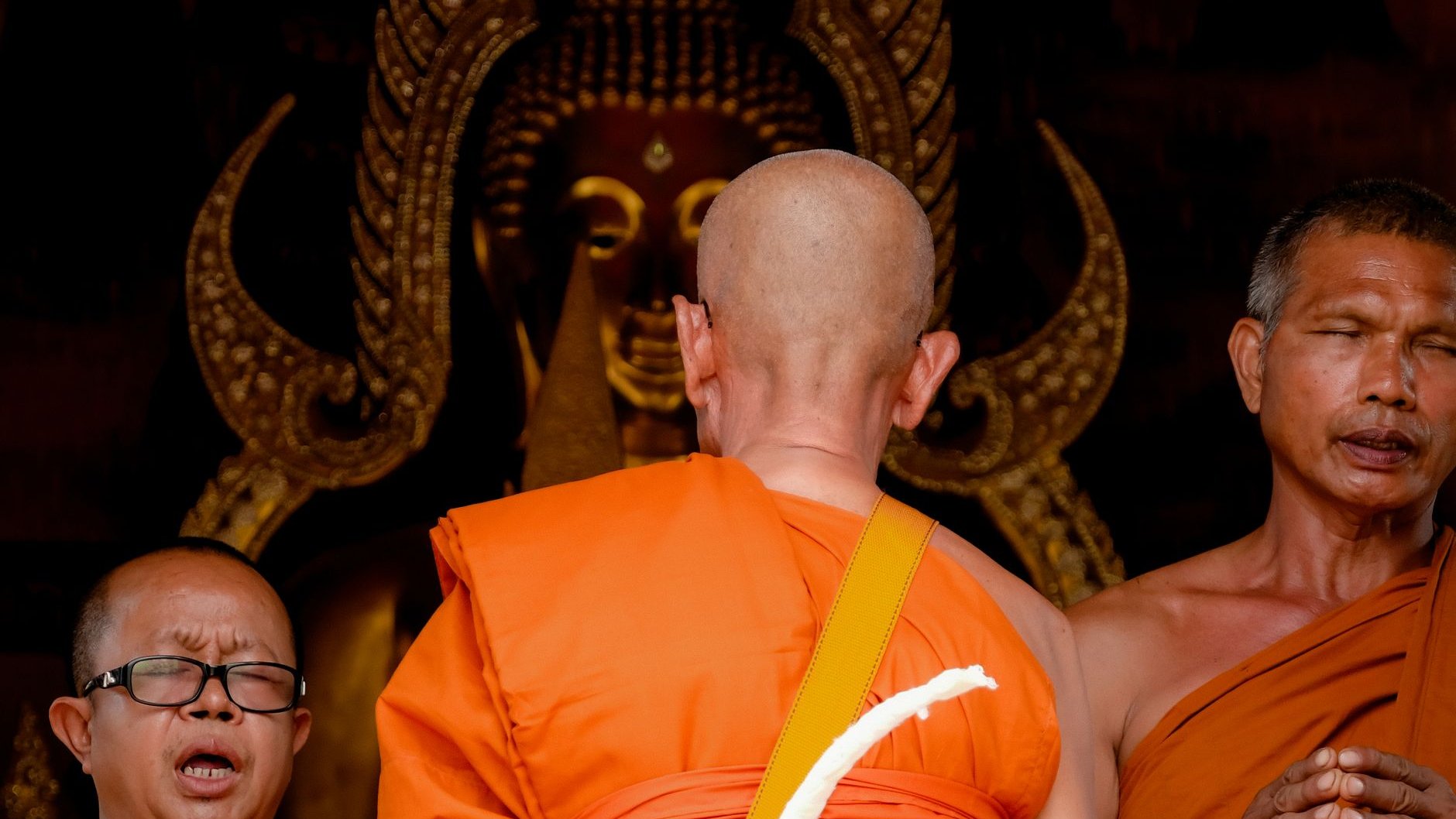
Do not touch or point at a Buddha image. Do not position yourself higher than one, and walk around it clockwise, according to TAT. When you leave a worship hall, back away a short distance before turning, since turning your back on the image is considered disrespectful.
Remove hats and sunglasses in the worship area.
Monks
Women should not touch a monk or his robes, according to TAT and the Bangkok Post. To give something to a monk, a woman can hand it to a man to pass on, or set it down for the monk to pick up. The Bangkok Post adds that you should use your right hand when giving or receiving anything from a monk.
At Wat Suan Dok, Monk Chat sessions are informal English conversations with students from the attached university campus. Thai Holiday Guide (updated July 2026) lists them on Monday, Wednesday and Friday from around 17:00 to 19:00, and says visitors can ask about Buddhism. Entry is free, with a donation box, and the temple is open from 04:00 to 20:00.
Photos and phones
Most temples allow photographs, according to TAT, but you should not block people who are praying or making donations. Silence your phone, keep your voice down, and avoid eating, chewing gum or smoking inside the grounds.
When you stay at a meditation centre
A day visit is a guest in a temple. A retreat makes you part of its routine.
- Precepts. Wat Ram Poeng asks students to take the eight precepts at an opening ceremony. The centre can ask anyone who ignores the rules to leave.
- Silence. Suan Mokkh’s course is silent throughout, and phones, tablets and laptops are handed in.
- Practice talk. Wat Ram Poeng says students may not talk about their practice, read, write or use a phone.
- Smoking. Wat Ram Poeng does not accept smokers.
For the full rules and costs of both centres, see our guide to silent meditation retreats in Thailand.
Donations
Donations at temples are voluntary. At Wat Suan Dok there is a donation box at the entrance. At Wat Ram Poeng, a one-time ฿500 fee covers bed laundry and ceremony supplies, and donations are accepted on the last day by cash or bank transfer only, according to the centre.
A note on health
Meditation retreats are wellbeing practices, not treatment. If you have a health condition or are taking medication, talk to a qualified doctor before a long retreat. Suan Mokkh says its retreat is not suitable for people with mental disorders or drug addictions.
Know before you go
- Where: Wat Phra That Doi Suthep and Wat Suan Dok in Chiang Mai, Wat Pho, Wat Arun and the Grand Palace in Bangkok, and Suan Mokkh and Wat Ram Poeng for retreats.
- Price: Entry to Wat Suan Dok is free. Wat Ram Poeng charges a one-time ฿500 fee (as published in October 2026). Fees at other sites are not covered here.
- Book: No booking for day visits. See each retreat centre’s own site for courses.
- Good for: First-time visitors and anyone planning a retreat who wants to arrive without worry.
- Check first: The temple’s own dress code, opening hours, and whether you need to carry a scarf or sarong.
A good rule on the way in is to slow down and watch what people around you do. Most of the etiquette is simply paying attention.
Mali. Mali writes about spas and retreats, meditation and spirituality, food and slow living across Thailand. Her name means jasmine in Thai; she believes rest is a skill, and that the best retreat is the one whose habits you take home.
RestRobin is editorial content, not medical advice. Prices, programmes and opening details change, so check with the provider before you book, and talk to a qualified doctor before starting a treatment, fast or detox programme.